
A strong brand is more than just a logo, color palette, or tagline. It represents how customers recognize, remember, and connect with a business. For new businesses, having a clear brand strategy for startups is essential for building recognition and trust from the beginning. As a company grows, its original branding may no longer represent its vision, audience, products, or market position. This is where a rebranding strategy becomes important. A well-planned brand strategy for startups and rebranding strategy can help businesses create a stronger identity, connect with the right audience, and remain competitive in a changing market.
What Is a Rebranding Strategy?

A rebranding strategy is a structured plan for changing or improving a brand’s identity and positioning. It can involve changes to the brand name, logo, colors, typography, messaging, visual identity, target audience, or overall market positioning. For startups, understanding these elements is an important part of developing an effective brand strategy for startups.
Rebranding does not always mean completely changing everything about a business. Sometimes, a company only needs a visual refresh or a clearer brand message.
In other situations, a complete transformation may be necessary. The main goal is to make sure the brand accurately represents where the business is today and where it wants to go in the future.
A strong brand strategy for startups should also create a foundation that can grow alongside the business.
A rebranding strategy is a structured plan that helps a business change, refresh, or reposition its brand to create a stronger connection with its target audience.
Rebranding is not simply about changing a logo, choosing new colors, or designing a modern website. It involves looking at the complete identity of a business and deciding how that identity should be presented to customers in the future.
A successful rebranding strategy can help a company stay relevant, communicate its values more clearly, attract a new audience, and create a stronger position in a competitive market.
For startups, building a strong brand strategy for startups from the beginning can reduce the need for major changes later. As businesses grow, customer expectations change, competitors become stronger, and market trends evolve.
Because of this, a brand that once worked perfectly may eventually feel outdated or disconnected from its audience.
Understanding the Current Brand
At its core, a rebranding strategy defines what a brand should represent and how that message should be communicated across different platforms.
It usually begins with understanding the current position of the brand. Before making any major changes, a business needs to identify what is working, what is not working, and how customers currently perceive the brand.
This can involve studying customer feedback, analyzing competitors, reviewing marketing performance, and examining the existing visual identity.
These same activities are valuable when developing a brand strategy for startups, because early research can help a new business establish a clear market position.
Define the Reason for Rebranding
One of the most important parts of a rebranding strategy is identifying the reason behind the change.
Businesses may choose to rebrand for many different reasons. A startup may want to create a more professional identity after gaining traction in the market.
An established company may want to appeal to a younger audience. A business may also rebrand after introducing new products, entering new markets, changing its business model, or merging with another company.
Sometimes, a brand simply becomes outdated and needs a fresh identity. Understanding the reason behind the rebrand helps the company make better decisions and prevents unnecessary changes.
For startups, defining these goals early is an important part of an effective brand strategy for startups.
Understand Your Target Audience
Another major element of a rebranding strategy is defining the target audience. A brand should always understand who it is trying to reach.
Customer preferences, lifestyles, expectations, purchasing behavior, and communication styles can influence how a brand should position itself.
For example, a company targeting young digital consumers may prefer a modern visual identity, simple communication, and an active social media presence.
On the other hand, a premium professional brand may focus more on sophisticated design, strong storytelling, and a sense of exclusivity.
A clear understanding of the target audience allows the business to create a brand identity that feels relevant and meaningful.
This is also one of the key foundations of a successful brand strategy for startups.
Develop Strong Brand Positioning
Brand positioning is an essential part of a rebranding strategy. It explains how a company wants to be perceived in the minds of its customers compared with competitors.
A business needs to understand what makes it different and why customers should choose it.
This difference could be based on quality, price, innovation, customer experience, sustainability, convenience, expertise, or another unique value.
During rebranding, businesses often redefine their positioning to make their competitive advantage clearer.
Strong positioning gives the brand a specific place in the market instead of allowing it to appear similar to every other competitor.
For startups, strong positioning should be established early as part of their brand strategy for startups.
Create a Strong Visual Identity
The visual identity of a brand is another important area affected by a rebranding strategy.
This can include the logo, colors, typography, photography style, graphics, packaging, website design, social media visuals, and other brand assets.
However, visual changes should support the brand’s overall strategy rather than being made simply because a particular design looks fashionable.
A successful visual identity should communicate the personality and positioning of the brand.
For example, a technology company may use a clean and modern visual system to communicate innovation.
A luxury brand may use elegant typography, refined colors, and minimal layouts to communicate exclusivity.
A thoughtful visual identity is therefore an important component of brand strategy for startups.
Build Clear Brand Messaging
Brand messaging is equally important. A company can have an attractive visual identity but still struggle if its communication is unclear.
A rebranding strategy should define the brand’s tone of voice, key messages, values, and communication style.
The brand should be able to explain who it is, what it offers, who it serves, and why it matters.
This messaging should remain consistent across websites, advertisements, social media posts, email campaigns, packaging, and customer communication.
Consistency helps customers recognize the brand and understand what they can expect from it.
Clear messaging should also be a core part of any brand strategy for startups.
Maintain Brand Consistency
Another important aspect of a rebranding strategy is maintaining consistency across every customer touchpoint.
Rebranding a company website while leaving outdated social media profiles, packaging, advertisements, or business documents unchanged can create confusion.
Customers should experience the new identity wherever they interact with the business.
This means updating digital platforms, marketing materials, product packaging, presentations, email templates, social media profiles, and other relevant brand assets.
Consistency makes the rebrand feel intentional and professional.
For startups, maintaining this consistency from the beginning can make their brand strategy for startups more effective.
Communicate the Rebrand
A successful rebrand also requires effective communication. Businesses should not suddenly introduce a completely new identity without explaining the reason behind the change.
Customers may become confused if they see a different logo, name, or message without any context.
A company can use social media, email marketing, website content, press announcements, and campaigns to introduce the new identity.
The story behind the transformation can even become part of the brand’s marketing strategy.
Instead of simply saying that the company has a new look, the business can explain how the new identity represents its growth, vision, and future direction.
For startups, strong brand storytelling can also support their overall brand strategy for startups.
Choose the Right Level of Rebranding
It is also important to understand that rebranding does not always mean changing the brand name.
There are different levels of rebranding. Some businesses may make small changes to their visual identity while keeping their name, values, and positioning.
This is often described as a brand refresh. Other companies may make major changes to their positioning, identity, messaging, and even their name.
The level of change should depend on the actual needs of the business. Changing everything unnecessarily can remove valuable brand recognition that the company has already built.
Set Measurable Goals
A rebranding strategy should also include measurable goals. A business needs to understand what it wants to achieve through the rebrand.
Goals could include increasing brand awareness, attracting a new customer segment, improving engagement, entering a new market, increasing website conversions, improving customer perception, or creating a stronger competitive position.
Tracking these results allows the company to understand whether the rebranding effort is actually producing meaningful improvements.
Similarly, a measurable brand strategy for startups can help new businesses track their growth and understand whether their branding efforts are creating stronger recognition and customer engagement.
Why Do Businesses Need a Rebranding Strategy?

Businesses can outgrow their original identity. A brand that worked well when a company was small may not communicate the same level of professionalism after years of growth. For startups, developing a strong brand strategy for startups from the beginning can help establish a clear identity and create a foundation for long-term growth.
One major reason for rebranding is changing customer expectations. Audiences constantly evolve, and brands need to understand what their customers value. A modern and relevant identity can help a company remain connected to its audience. A well-planned brand strategy for startups helps businesses understand their target audience and create branding that reflects their expectations.
Another reason is increased competition. When several businesses offer similar products or services, strong branding can help one company stand apart from the rest. For startups entering competitive markets, an effective brand strategy for startups can define what makes the business different and give customers a clear reason to choose it.
Rebranding can also be useful when a business introduces new products, enters new markets, changes its target audience, or wants to reposition itself as a premium or modern brand. For startups, establishing a flexible brand strategy for startups early can make it easier to adapt the brand as the business grows, reaches new audiences, and enters new markets.
Key Steps in a Rebranding Strategy

1. Research and Analyze
The first step in a rebranding strategy is to understand the current position of the brand. Before making any changes, businesses should research their target audience, competitors, market trends, customer expectations, and existing brand performance. For startups, this research is also an important foundation of a successful brand strategy for startups, helping identify opportunities and areas that need improvement.
Businesses should also collect customer feedback and analyze their current website, social media presence, visual identity, messaging, and overall customer experience. Understanding these factors provides a clear foundation for making informed rebranding decisions and developing a stronger brand strategy for startups instead of making changes based only on assumptions.
2. Define Your Goals
Once the research is complete, the next step is to define clear goals for the rebranding process. A business should understand exactly why it needs to rebrand. The objective could be to reach a new audience, improve brand perception, enter a new market, modernize an outdated identity, overcome negative associations, or differentiate the business from competitors.
Setting measurable goals makes it easier to evaluate whether the rebranding strategy has been successful. For startups, clear goals are also an important part of a brand strategy for startups. For example, a company may aim to increase brand awareness, improve website engagement, attract a younger audience, or strengthen customer recognition.
3. Develop Your Brand Strategy
After defining the goals, businesses need to develop the foundation of the new brand. This includes defining brand positioning, values, personality, messaging, and overall communication style. For startups, developing a clear brand strategy for startups can help establish what the business stands for and why customers should choose it over competitors.
A strong brand strategy creates consistency across every customer touchpoint. Whether customers interact with the business through a website, social media, advertisements, packaging, or customer service, they should experience the same core brand message and personality. This consistency is essential for building a recognizable brand strategy for startups.
4. Design Your New Identity
Once the strategic foundation is established, the business can begin developing its new visual identity. This may include a new logo, color palette, typography, imagery, graphic elements, and other brand assets. The visual identity should reflect the brand’s personality and support its positioning.
For startups, visual identity should be developed as part of the overall brand strategy for startups, rather than being treated as a separate design exercise. However, good rebranding design is not only about making a brand look attractive. Every visual element should have a purpose and work together consistently. A strong visual identity makes the business easier to recognize and helps create a memorable impression among customers.
5. Communicate the Change
A rebrand should be communicated clearly to both existing and potential customers. Businesses need to introduce the new identity across relevant channels, including websites, social media platforms, email campaigns, advertisements, packaging, and other customer-facing materials.
Communication is especially important when a business has an established customer base. Customers should understand why the company is changing and what the new brand represents. For startups, clear communication should also be included in the brand strategy for startups so that customers can easily understand the company’s identity, values, and purpose. Sharing the story behind the rebrand can make the transition feel more meaningful and help customers connect with the new identity.
6. Monitor and Evaluate
Rebranding does not end when the new logo or visual identity is launched. Businesses should continuously monitor the performance of the new brand and collect feedback from customers, employees, and other stakeholders. Website analytics, social media engagement, customer responses, brand awareness, and sales performance can provide useful insights.
For startups, monitoring these results can help determine whether their brand strategy for startups is creating stronger brand awareness, engagement, and customer recognition. If certain elements are not producing the expected results, businesses can make improvements over time. Regular evaluation ensures that the new brand remains effective and aligned with customer expectations and business goals.
Common Rebranding Mistakes
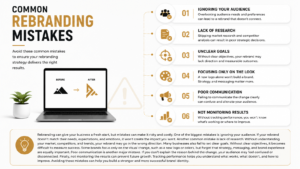
Rebranding can give a business a fresh identity and help it connect with a new audience, but poor planning can make the process ineffective and costly. One of the most common rebranding mistakes is ignoring your audience. A new brand should reflect the needs, preferences, and expectations of its target customers. If businesses make changes without understanding their audience, the new identity may fail to create the desired connection.
Another major mistake is lack of research. Businesses should research their market, competitors, customer behavior, and current brand performance before starting a rebrand. Without proper research, important opportunities can be missed and the new strategy may not match the market.
Having unclear goals can also weaken a rebranding strategy. Businesses should clearly define why they are rebranding and what they want to achieve. Whether the goal is to reach a new audience, improve brand perception, or enter a new market, measurable objectives help guide the entire process.
Some businesses also make the mistake of focusing only on the visual identity. A new logo, color palette, or typography can improve the appearance of a brand, but rebranding is much more than design. Brand positioning, messaging, values, personality, and customer experience are equally important.
Poor communication is another common problem. Customers should understand why the brand is changing and what the new identity represents. Finally, businesses should avoid not monitoring results after launching the rebrand. Tracking customer feedback, engagement, website performance, and other relevant metrics helps identify what is working and where improvements are needed.
By avoiding these common rebranding mistakes, businesses can create a more strategic, relevant, and successful brand identity that supports long-term growth.
Conclusion
A successful rebranding strategy is not simply about making a business look different. It is about creating a stronger connection between the business, its audience, and its future goals.
From researching customers and competitors to developing a new visual identity and communication style, every part of the rebranding process should have a clear purpose.
When executed correctly, rebranding can help a business become more relevant, memorable, competitive, and ready for its next stage of growth. The key is to remember that rebranding is not just a design project—it is a strategic business decision.
Author Razin Sha