
What Is a Brand Strategy for Startups?
A brand strategy is a long-term plan that defines how a startup wants to be perceived by its target audience.
It goes beyond choosing a logo or brand colors. A complete brand strategy covers things such as:
- Brand purpose
- Target audience
- Brand positioning
- Brand personality
- Brand values
- Visual identity
- Brand messaging
- Customer experience
- Communication channels
Think of your brand strategy as the direction behind your brand.
Your logo is what people see. Your brand strategy determines why they should remember you, trust you, and choose you.
Starting a business is exciting, but creating a memorable brand is a completely different challenge. Many startups focus heavily on developing their product, finding customers, and generating sales while overlooking one of the most important long-term assets: their brand.
A strong brand strategy for startups helps a new business establish a clear identity, differentiate itself from competitors, build customer trust, and create a foundation for sustainable growth
.
What Is a Brand Strategy for Startups?
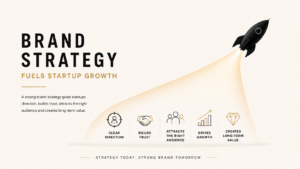
Brand strategy is one of the most important foundations for a startup because brand strategy for startups helps a new business build a clear identity, connect with the right audience, and stand out in a competitive market.
When a startup is launched, it often focuses heavily on developing its product, finding customers, generating sales, and managing finances. However, without a strong brand strategy for startups, even a good product can struggle to gain attention and build trust.
Brand strategy for startups provides a clear direction for how the business should present itself, communicate with customers, and create a memorable experience. It is not simply about choosing a logo, colors, or fonts. It is about defining what the brand stands for and why customers should choose it over competitors.
A strong brand strategy for startups begins with understanding the target audience. Startups need to identify who their ideal customers are, what problems they face, what they expect from a product or service, and what motivates their buying decisions.
This understanding allows the startup to create a brand message that feels relevant and meaningful. For example, a startup targeting young, technology-focused customers may use a modern visual identity and simple communication style, while a premium business may focus on sophistication, trust, and exclusivity.
Another important part of brand strategy for startups is defining the brand’s positioning. Brand positioning explains how a startup wants to be perceived in the minds of customers compared with its competitors.
A clear positioning statement can help a startup communicate its unique value and avoid looking like every other business in the market. This is particularly important for startups because they usually have limited budgets and cannot compete with established companies through massive advertising campaigns.
Instead, a distinctive brand can help them create recognition through consistent communication and memorable experiences. This is why brand strategy for startups should focus on differentiation rather than simply copying successful competitors.
Consistency is another major advantage of having a brand strategy for startups. Every customer interaction should feel connected, whether it happens through a website, social media page, advertisement, packaging, email, or physical store.
Consistent colors, typography, tone of voice, visuals, and messaging make a brand easier to recognize and remember. Over time, this consistency can contribute to stronger brand awareness and customer trust.
Trust is especially valuable for startups because customers may hesitate to purchase from a company they have never heard of before. A professional and consistent brand can make a new business appear more credible and established. A well-planned brand strategy for startups can therefore help reduce uncertainty and create a stronger first impression.
Brand strategy for startups also plays an important role in building emotional connections with customers. People do not always make purchasing decisions based only on features and price. They can also choose brands because they identify with their values, personality, story, or vision.
A startup with a clear purpose and authentic story can create a deeper relationship with its audience. This emotional connection can encourage customers to return, recommend the brand to others, and become loyal supporters.
In addition, brand strategy for startups helps businesses make better marketing decisions. Instead of creating random social media posts or advertisements, the startup can use its brand positioning, audience insights, tone of voice, and visual identity as a framework for content creation.
This makes digital marketing more focused and efficient. It also helps different team members communicate the brand consistently as the company grows.
A well-defined brand strategy for startups can even support future expansion because the business already has a strong foundation from which new products, services, campaigns, and markets can be developed.
Ultimately, brand strategy for startups is about creating a clear identity that people can recognize, understand, and trust. It gives the business a sense of direction and helps transform a simple product or service into a meaningful brand.
Startups that invest in branding early can create stronger customer relationships, differentiate themselves from competitors, and build long-term value. While products may change and marketing trends may come and go, a strong brand strategy for startups provides a stable foundation for growth.
For startups looking to build a successful business in a competitive digital environment, brand strategy for startups should not be treated as an optional design exercise. It should be considered a core part of the overall business and marketing strategy.
Why Brand Strategy for Startups Is Important
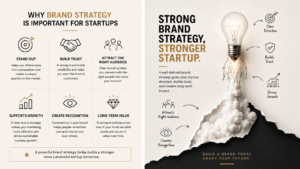
A brand strategy for startups is a long-term plan that defines how a new business wants to present itself and how it wants to be perceived by its target audience. It gives the startup a clear direction for building its identity, communicating its value, and creating a consistent experience for customers.
Brand strategy for startups is much more than creating a logo, choosing colors, or selecting fonts. It includes important elements such as the brand’s purpose, values, personality, positioning, messaging, visual identity, and customer experience. All these elements work together to create a clear and recognizable brand.
For a startup, having a clear brand strategy for startups is especially important because it often enters a market where customers already have many options. A strong strategy helps the business explain what makes it different and why customers should choose it instead of a competitor.
Understanding the target audience is another important part of brand strategy for startups. Startups need to identify who their ideal customers are, what problems they face, what they value, and what motivates them to make a purchase. This understanding helps the brand create messages and experiences that feel relevant to the right audience.
Brand positioning also plays a major role in brand strategy for startups. It defines the place a startup wants to occupy in the customer’s mind compared with competing businesses. A clear position can help a startup communicate its unique value instead of competing only on price or product features.
Consistency is equally important when developing a brand strategy for startups. Customers should feel that they are interacting with the same brand whether they visit the website, see an Instagram post, receive an email, or interact with customer support. Consistent visuals, messaging, tone, and experiences can make a startup easier to recognize and remember.
A strong brand strategy for startups can also guide marketing decisions as the business grows. Instead of creating content or campaigns without a clear direction, startups can use their strategy as a framework for deciding what to say, how to communicate, and which audience to focus on.
For example, a startup targeting young professionals may choose a modern visual identity, simple messaging, and a confident tone of voice. A premium business may instead focus on sophistication, trust, refined design, and a more professional communication style. These decisions should be connected to the overall brand strategy for startups.
In simple terms, brand strategy for startups is the direction behind a startup’s brand. It helps answer important questions such as who the brand is, who it serves, what it stands for, how it is different, and why customers should remember and trust it.
A well-defined brand strategy for startups creates a strong foundation for marketing, customer relationships, and long-term growth. While products, campaigns, and trends may change over time, a clear strategy can provide the consistency and direction needed to build a memorable brand.
Startups often enter markets where customers already have established choices. This makes differentiation extremely important. A strong brand strategy for startups can help a new business communicate its unique value, build recognition, and create a stronger position in a competitive market.
A strong brand strategy can help a startup:
1. Stand Out From Competitors
If several businesses offer similar products or services, customers need a reason to choose one over another.
Clear positioning can communicate what makes your startup different.
2. Build Customer Trust
People are more likely to buy from businesses that appear professional, consistent, and trustworthy.
A consistent brand experience across your website, social media, advertising, and customer service can strengthen that trust.
3. Create Brand Recognition
Consistent colors, typography, messaging, visuals, and tone can make your startup easier to recognize.
Over time, recognition can become a valuable competitive advantage.
4. Attract the Right Audience
A startup shouldn’t try to appeal to everyone.
A clear brand strategy helps you communicate specifically with the people most likely to value your product or service.
5. Support Long-Term Growth
Your startup may change as it grows, but a strong brand foundation can make future marketing and communication much easier.
7 Steps to Build a Brand Strategy for Startups

1. Define Your Brand Purpose
Building an effective brand strategy for startups begins with understanding the foundation of the business. Start by asking::
Why does your startup exist beyond making money?
Your purpose should explain the problem you’re trying to solve and the change you want to create.
For example:
“We help small businesses compete online by making professional digital marketing more accessible.”
A clear purpose gives your brand direction and makes your communication more meaningful.
2. Understand Your Target Audience
One of the biggest mistakes startups make is trying to target everyone.
Instead, identify your ideal customer.
Consider:
- Age
- Location
- Profession
- Interests
- Problems
- Buying behavior
- Goals
- Pain points
- Preferred platforms
For example, instead of saying:
“Our target audience is everyone who wants better clothing.”
A clothing startup might define its audience as:
“Young adults who prefer minimal, premium streetwear and value quality and individuality.”
The more clearly you understand your audience, the easier it becomes to create relevant marketing.
3. Develop Your Brand Positioning
Brand positioning answers one important question:
Why should customers choose your startup instead of a competitor?
Your positioning should communicate your unique value.
A simple framework is:
For [target audience], [brand] is the [category] that [unique benefit] because [reason to believe].
For example:
“For young professionals, Brand X is a premium everyday clothing brand that combines minimal design with high-quality materials.”
This gives your startup a clear position in the customer’s mind.
4. Create a Strong Brand Identity
Your visual identity is how your brand communicates visually.
It can include:
- Logo
- Color palette
- Typography
- Photography style
- Graphic elements
- Packaging
- Website design
- Social media design
But remember:
A brand identity should support your strategy—not replace it.
A beautiful logo cannot fix unclear positioning.
Your visual identity should reflect your target audience and brand personality.
For example:
Luxury brand:
Minimal layouts + refined typography + sophisticated colors.
Youth-focused brand:
Bold typography + energetic visuals + expressive graphics.
Technology startup:
Clean interfaces + modern typography + simple visual systems.
5. Define Your Brand Voice
Your brand needs a consistent personality when communicating with customers.
Ask:
If my brand were a person, how would it speak?
Your brand voice could be:
- Professional
- Friendly
- Bold
- Premium
- Minimal
- Playful
- Inspirational
- Educational
For example, a premium consulting brand might use:
“Strategic solutions designed for sustainable growth.”
A youth-focused brand might say:
“Built for those who don’t follow the usual.”
Both can communicate value, but their personalities are completely different.
6. Build Consistency Across Digital Platforms
Your brand should feel like the same brand everywhere.
Maintain consistency across:
- Website
- YouTube
- Advertisements
- Packaging
- Customer communication
This doesn’t mean every platform needs identical content.
Instead, the brand identity and personality should remain consistent while the content adapts to each platform.
For example:
Your Instagram might focus on visual storytelling, while LinkedIn focuses on expertise and business insights.
Both should still feel like they belong to the same brand.
7. Measure and Improve Your Brand Strategy
Brand strategy isn’t something you create once and forget.
As your startup grows, your audience, competitors, and market can change.
Track indicators such as:
- Brand awareness
- Website traffic
- Social media engagement
- Customer retention
- Direct searches
- Conversion rates
- Customer feedback
- Brand mentions
Use these insights to understand what’s working and where your brand needs improvement.
Common Branding Mistakes Startups Should Avoid
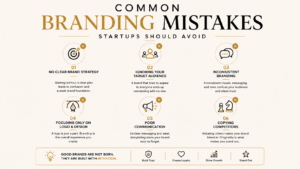
1. Trying to Appeal to Everyone
One of the biggest mistakes startups make is trying to target everyone. When a brand tries to communicate with every type of customer, its message can become unclear and generic.
Instead, startups should identify their ideal audience and create messaging that speaks directly to their needs, interests, and problems. A focused audience makes it easier to build a brand that feels relevant and memorable.
2. Copying Competitors
Looking at competitors can help startups understand the market, but directly copying their branding can make a business look ordinary.
Your logo, colors, messaging, and overall personality should give customers a reason to remember your brand. Startups should study competitors for inspiration while developing their own unique identity and positioning.
3. Changing the Brand Too Frequently
Another common mistake is constantly changing the brand identity. Frequently changing logos, colors, fonts, messaging, or brand positioning can confuse customers and reduce recognition.
A startup should give its identity enough time to become familiar with its audience. Changes should be made when there is a clear strategic reason, not simply because a new design trend becomes popular.
4. Focusing Only on the Logo
A logo is an important part of branding, but it is not the entire brand. A strong brand also includes its voice, values, messaging, customer experience, visual identity, and overall communication.
Startups should focus on creating a complete brand experience rather than spending all their attention on designing the perfect logo.
5. Ignoring Customer Experience
A startup may have an attractive website and professional visual identity, but poor customer service can quickly damage its reputation.
Every interaction with customers contributes to how they perceive the brand. From social media communication to customer support and product delivery, startups should aim to provide a consistent and positive experience.
6. Being Inconsistent Across Platforms
Using different styles, messages, and personalities across different platforms can weaken brand recognition.
A startup should maintain a consistent identity across its website, social media, email, advertising, and other communication channels. The content can change depending on the platform, but the overall brand personality and message should remain consistent.
Brand Strategy vs Branding: What’s the Difference?
Brand Strategy vs Branding
Brand strategy and branding are closely connected, but they are not the same thing. Many startups use these terms interchangeably, even though they have different roles in building a successful business.
Understanding the difference can help startups create a clear direction and communicate their value more effectively.
What Is Brand Strategy?
Brand strategy is the long-term plan behind a brand. It defines how a startup wants to be perceived by its target audience and explains what the brand stands for.
It includes important elements such as the target audience, brand purpose, positioning, values, personality, messaging, and customer experience.
A clear brand strategy helps a startup decide what to communicate, who to communicate with, and how to differentiate itself from competitors.
It acts as a roadmap that guides marketing and branding decisions as the business grows.
What Is Branding?
Branding is the execution of the brand strategy. It is how customers visually and emotionally experience the brand.
Branding can include the logo, colors, typography, photography, website design, packaging, social media content, and tone of communication.
For example, if a startup’s strategy is to position itself as a premium and modern brand, its branding might use sophisticated typography, a refined color palette, professional photography, and consistent messaging.
Brand Strategy vs Branding
The easiest way to understand the difference is to think of strategy as the direction and branding as the expression.
Brand strategy decides where the brand wants to go and how it wants to be perceived. Branding helps communicate that strategy through visuals, messaging, content, and customer experiences.
Why Startups Need Both
A startup needs both a strong strategy and consistent branding. A great visual identity without a clear strategy may look professional but fail to communicate a meaningful message.
Similarly, a strong strategy without effective branding may not be communicated clearly to customers.
When brand strategy and branding work together, startups can create a recognizable identity, communicate their value clearly, build customer trust, and develop stronger relationships with their target audience.
In simple terms, brand strategy decides what your brand stands for, while branding shows people what that brand looks, sounds, and feels like. Both are essential for building a strong and memorable startup brand.
Author. Razin Sha